Games in this guide: Fuse Field, Number Nest, Mergeforge, Stackfall. All free to play in your browser.
Why puzzles are good for you (and what they are not)
Puzzle games are a satisfying way to give your mind a workout. They ask you to notice patterns, hold several facts in your head and plan ahead. This guide looks at four of the puzzles on flashcadia, what kind of thinking each one uses, and how to get better at them.
A note of honesty first. Research suggests that getting better at a puzzle mostly makes you better at that puzzle. No game is a magic pill for memory or intelligence. But regular puzzling is a healthy, focused break, it is fun, and the skills it uses (careful logic, planning and staying calm) are useful everywhere. That is reason enough.
Fuse Field: pure logic
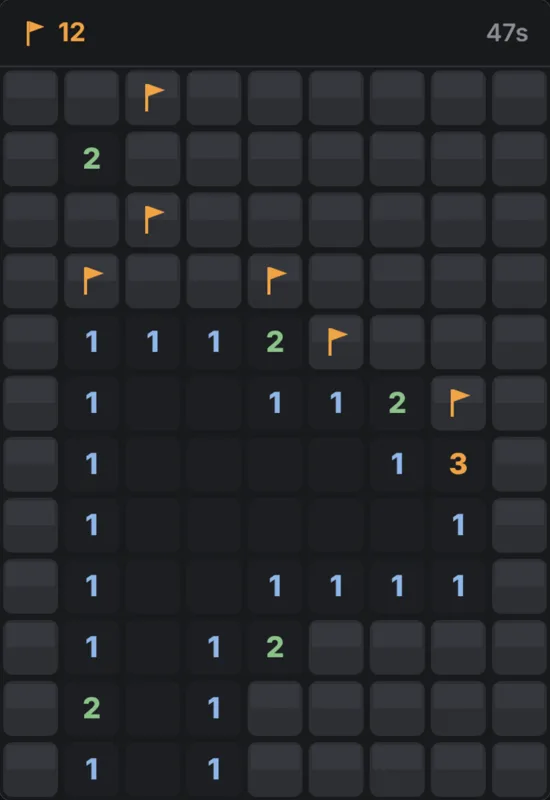
Fuse Field follows the classic minesweeper rules. A grid hides a number of fuses. Every square you dig shows how many fuses touch it, including diagonals. Your job is to dig every safe square and flag the fuses.
What it trains: deductive logic. You take small facts and combine them into a certain conclusion. Most of the time no guessing is needed.
- Start in the middle. Your first dig is always safe and often opens a big area.
- A 1 touching only one hidden square means that square is a fuse. Flag it.
- When a number already has all its fuses flagged, every other square around it is safe.
- Learn the 1-2-1 pattern. When three opened squares in a straight line read 1, 2, 1 with a row of hidden squares beside them, the fuses sit across from the two 1s and the square across from the 2 is safe.
- Flag with a long-press on a phone or a right-click with a mouse.
Number Nest: logic with structure
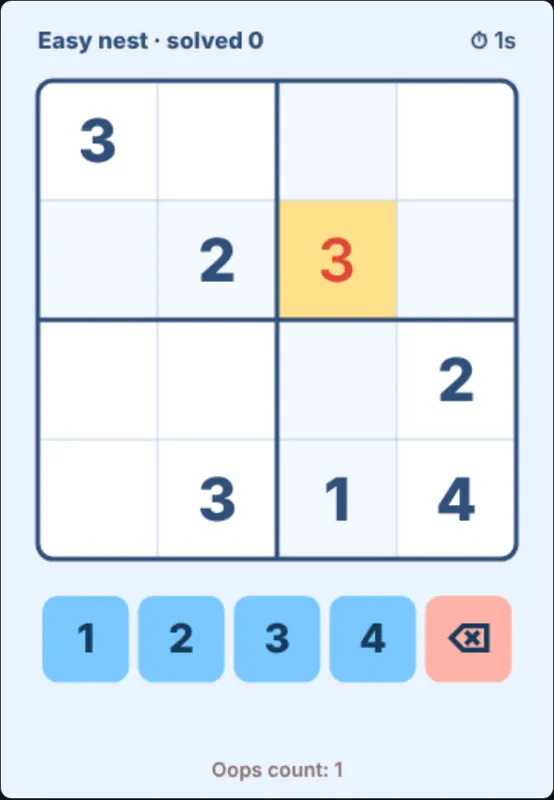
Number Nest is a mini sudoku. Fill every row, column and box with each number exactly once. Easy puzzles use a 4×4 grid, and harder ones use 6×6. Every puzzle has exactly one answer and can be solved without guessing.
What it trains: systematic thinking and working memory. You keep track of which numbers are possible in which squares.
- Look for a row, column or box with only one gap. The missing number is obvious.
- For any empty square, list the numbers already used in its row, column and box. If only one is left, that is your answer.
- Try it the other way round too: pick a number and look for the only square in a box where it can go.
- Start on 4×4 until it feels easy, then move to 6×6.
Mergeforge: planning ahead
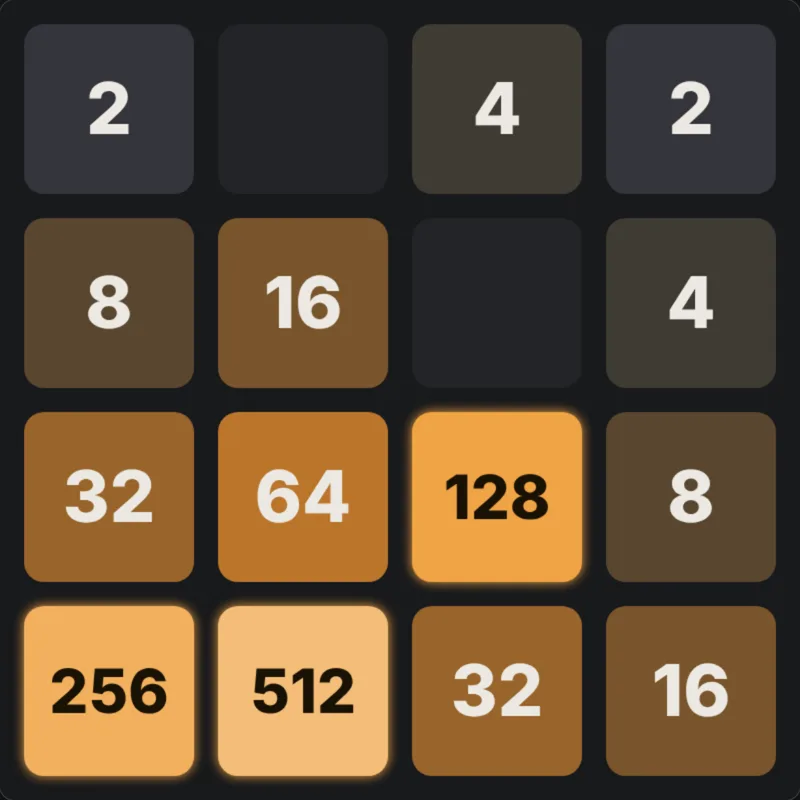
Mergeforge is a 2048-style sliding puzzle. Each move slides every tile in one direction. Matching numbers merge into one tile worth double. After every move, a new 2 or 4 appears in an empty space.
What it trains: planning and strategy. Each move affects the whole board, so you have to think about consequences, not just the next merge.
- Pick a corner and keep your biggest tile there.
- Build a chain of big numbers along one edge, each next to the one that is half its size.
- Avoid the one direction that would pull your big tile out of its corner.
- Merge small tiles early so the board does not fill with 2s and 4s.
The corner strategy works because it keeps your biggest numbers out of the way while small tiles appear in the open space. Most players who reach 2048 for the first time do it by sticking to two or three directions almost all the time. When you get there, you can keep going for an even bigger tile.
Stackfall: spatial thinking at speed
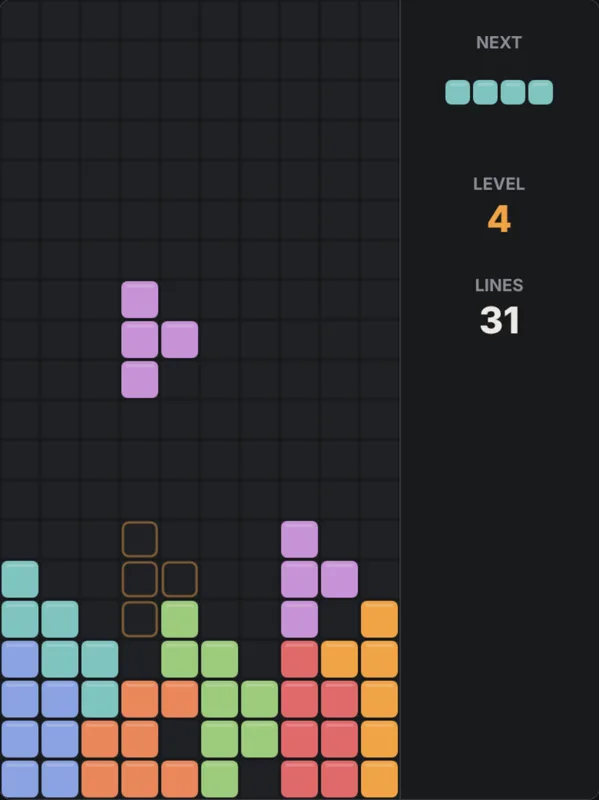
Stackfall is a falling-block puzzle. Shapes drop into a well, and you move and rotate them to fill complete rows, which then clear. As you clear more rows, pieces fall faster.
What it trains: spatial reasoning (picturing how shapes fit after a turn) and quick decision-making under time pressure.
- Keep the stack flat. Bumps and towers create holes that are hard to fill.
- Leave one column empty at the side, then drop a long piece in to clear several rows at once.
- Rotate pieces early, while there is space at the top.
- Use the fast drop once you know where a piece belongs. It buys time for the tricky ones.
Which one should you start with?
If you like careful, quiet thinking, start with Number Nest on 4×4. If you enjoy detective work, try Fuse Field. If you like long-term plans, Mergeforge is for you. And if you want something with more energy, Stackfall gets your heart going a little.
They also pair well. The calm logic puzzles (Fuse Field and Number Nest) have no time pressure, so they suit a slow coffee break. Mergeforge sits in the middle. Stackfall is the fast one.
A ten-minute daily routine
Here is a simple routine that uses all four in about ten minutes:
- Warm up with one Number Nest puzzle (two to three minutes).
- Solve one Fuse Field board, aiming for zero guesses (three minutes).
- Play one round of Stackfall and try to beat yesterday's line count (two to three minutes).
- Finish with a few minutes of Mergeforge, sticking to your corner the whole time.
Keep it short and regular rather than long and rare. A few focused minutes a day is more enjoyable, and you will notice yourself solving faster within a week or two. All four games run in your browser with nothing to install, so they are easy to fit into a break.
Ready to try it? Play Fuse Field, Number Nest, Mergeforge and Stackfall free on flashcadia, with nothing to download.